Home › Services › Commercial Water Softeners
Commercial water softeners in Las Vegas run $3,000–$10,000 installed for most businesses, sized by daily grain load: gallons per day times the valley’s 17 grains per gallon of Lake Mead hardness. Duplex alternating systems keep water soft through regeneration for operations that can’t stop.
Below: how commercial sizing works on the hardest big-city water in the country, what scale costs equipment, and where duplex systems earn their keep.
Why do Las Vegas businesses need commercial-grade softening?
Because hardness scales with volume. A household softener handles maybe 300 gallons a day; a bar's ice and glasswash lines, a restaurant dish pit, or a salon floor can run ten times that. Multiply by the 17 grains per gallon the Las Vegas Valley Water District's own report classifies as very hard — among the hardest big-city supplies in the country — and the daily grain load lands in the hundreds of thousands. The same water that spots a home shower door is scaling your ice machine, glasswasher, and water heaters at commercial speed, and residential units pressed into that duty regenerate constantly and die young. Sizing from your actual gallons and this water's actual grains is the whole discipline.
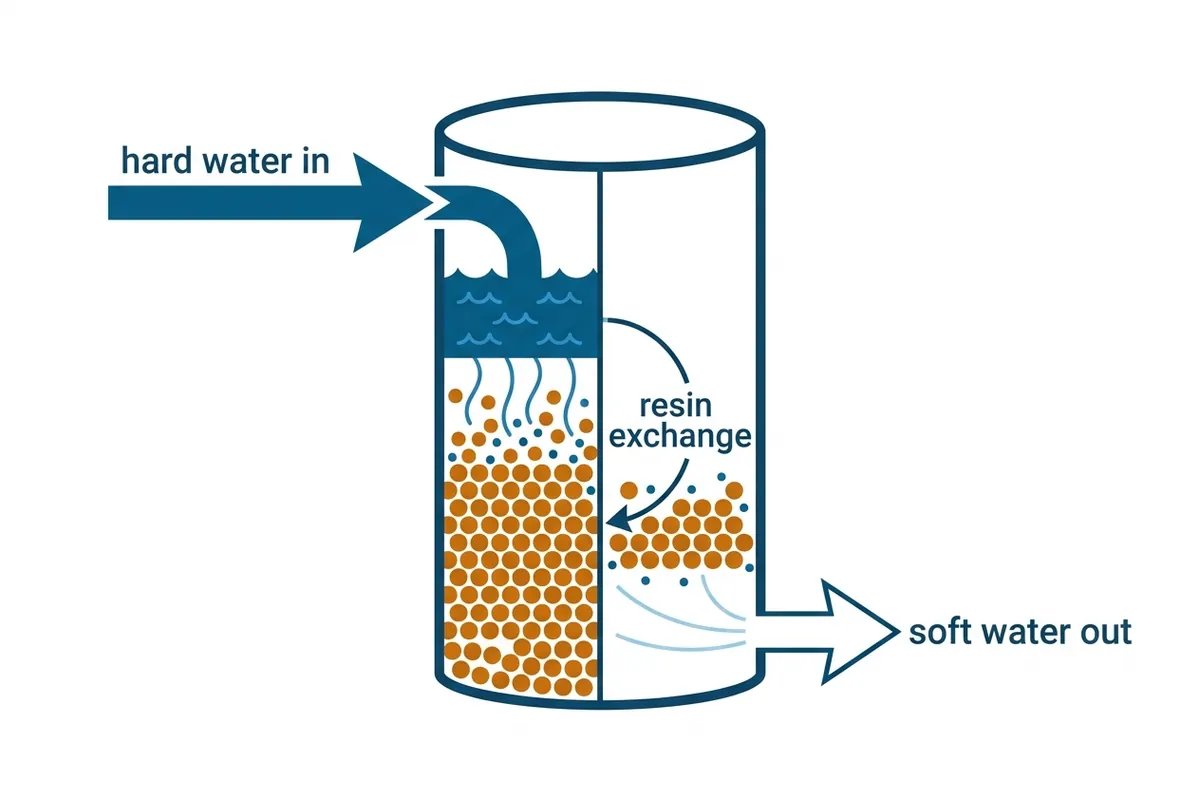
What does 17-grain water cost commercial equipment?
Scale works fastest where water is heated or frozen — which is most of a hospitality operation:
| Equipment | What 17 grains does | What softening protects |
|---|---|---|
| Ice machines | Scale on evaporator plates, cloudy ice | Clear ice that pours like the menu promises |
| Glasswashers & dishwashers | Spotted glassware, fouled jets, detergent overuse | Bar-ready glass at lower chemical dose |
| Boilers & water heaters | Scale insulates elements — longer burns, early failures | Rated efficiency and element life |
| Espresso & coffee machines | Boiler and group-head scale at valley pace | Consistent extraction, fewer descales |
| Laundry & salon fixtures | Gray linens, crusted aerators, dull rinses | Presentable fixtures per wash dollar |
Most commercial kitchen-equipment warranties assume treated feed water — running an ice machine or combi oven on untreated 17-grain supply can move failures from their ledger to yours. The softener is usually cheaper than the first voided repair.
What size softener does a business need?
Whatever the math says. Sizing starts with your water bills and your busiest week: gallons per day times 17 grains gives the design grain load, and the system is sized so regeneration happens on schedule, not mid-service. For operations that can't stop — restaurants, bars, coffee shops, salons, laundries, and the off-Strip hospitality businesses this valley runs on — a duplex alternating system keeps one resin tank in service while the other regenerates: when the working tank exhausts, the valve swaps and the spent tank recharges behind the scenes. That's the difference between a softener and a soft-water guarantee. The same demand math predicts your salt budget in pounds per month, so the quote reads like an operating plan instead of a sticker.
What does the install involve?
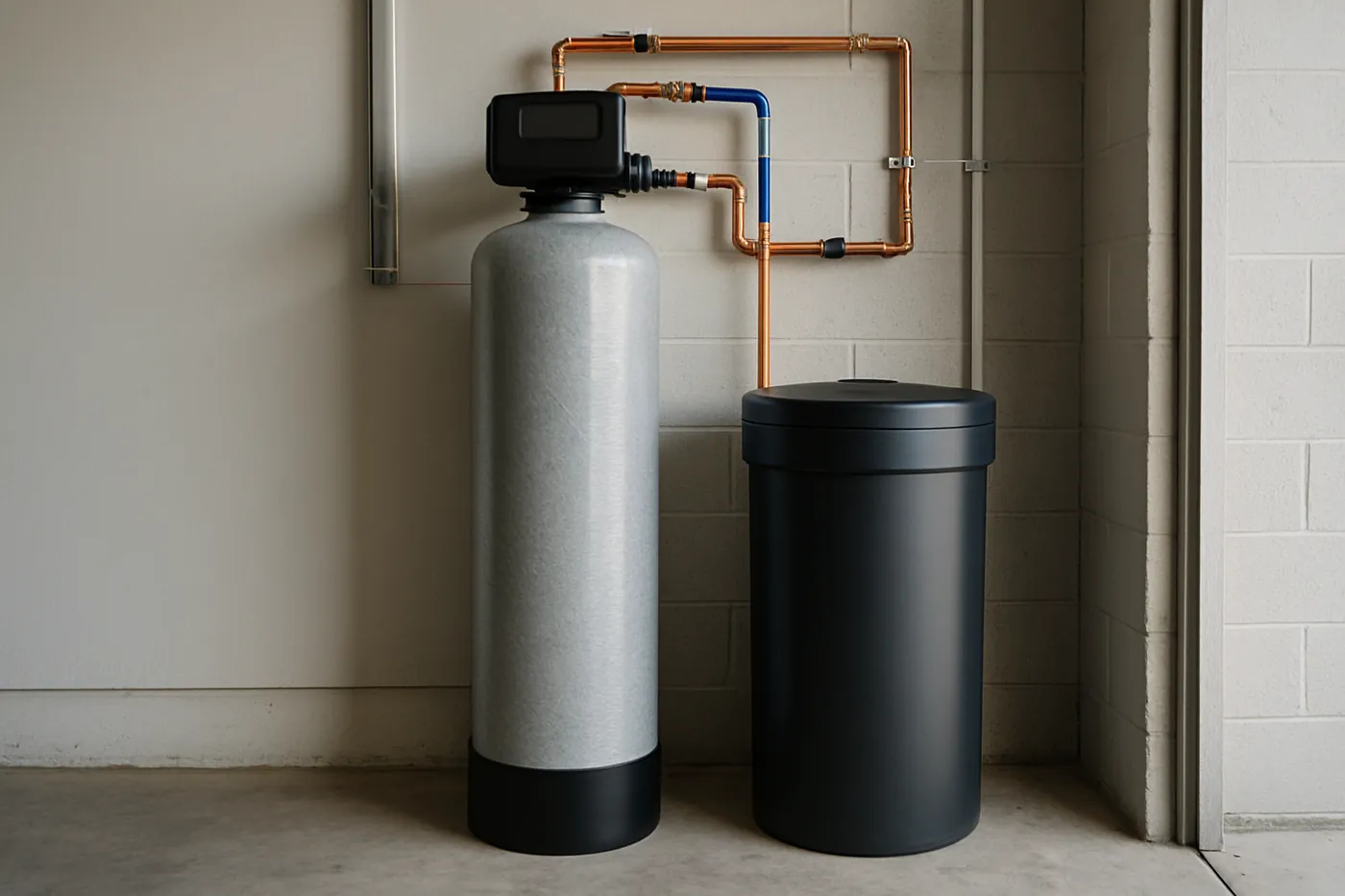
It starts with a hardness test at your own tap and a demand calculation from your actual water use — free, and worth having even if you stop there. The install plumbs the system at the meter side with a bypass, ties the drain per code, and commissions the valve on your numbers. Afterward, the same crew handles softener repair, our salt delivery keeps the brine tank full on schedule, and filtration or reverse osmosis can join the loop where taste matters to the product — espresso and clear-ice programs usually add the RO stage. Residential sizing lives on the installation page; every number is in the cost guide.
What does it cost to run, month to month?
The install price is the smaller question; the operating number is the one that shows up forever. Two line items drive it. Salt is the first, and it scales with the hardness you are removing — a valley business softening a few thousand gallons a day should budget for regular bulk deliveries rather than bags carried in through the kitchen, and the demand calculation we do at quote time predicts that tonnage before you buy anything.
Water is the second: every regeneration sends a measured volume to drain, which is why right-sizing matters twice in a desert. An oversized system regenerates more water than you need; an undersized one regenerates constantly. Sized correctly, most operations find the softener pays for a meaningful share of itself in detergent, descaling labor, and equipment that reaches its rated life.
What maintenance does a commercial system need?
Commercial softeners are durable and unglamorous, and they fail in predictable ways when nobody looks at them. Monthly, check the brine tank — salt should be present and loose, and a hard crust bridging over empty space means the unit has quietly stopped making brine while appearing full. Annually, have the valve and injector serviced and the resin bed inspected; on 17-grain water, resin works harder here than the manufacturer’s national assumptions suggest. Confirm the drain line stays clear and properly air-gapped, which is both a code requirement and the first thing a health inspector notices. And keep testing: a periodic hardness check downstream is the only proof the system is still doing what you are paying it to do.
What does a commercial water softener cost in Las Vegas?
Most commercial installations land in the $3,000–$10,000 range — capacity, duplex versus single tank, and plumbing complexity set the number, and heavy-duty applications can run beyond it. Hardness figures come straight from the Las Vegas Valley Water District 2025 water quality report, and the site visit that produces your written quote includes the tap test and demand calculation at no charge.
Frequently asked questions about Las Vegas systems
Why do Las Vegas businesses need commercial-grade softening?
Because hardness scales with volume. The valley's 17-grain Lake Mead water is among the hardest big-city supplies in the country, and a bar, restaurant, or salon running thousands of gallons a day multiplies it into a daily grain load in the hundreds of thousands. Residential units pressed into that duty regenerate constantly and fail early.
What does 17-grain water cost commercial equipment?
Scale insulates heating elements into longer burns and early failures, fouls ice-machine evaporators and dishwasher jets, and spots every glass on the bar top. At 17 grains, valley equipment scales at roughly twice the pace of an average hard-water market, and most commercial kitchen-equipment warranties assume treated feed water.
What size softener does a business need?
Whatever the math says: daily gallons times 17 grains gives the design grain load, and the system is sized so regeneration happens on schedule rather than mid-service. Operations that cannot stop get duplex alternating systems, with one tank always in service while the other regenerates.
What does a commercial water softener cost in Las Vegas?
Most commercial installations land in the $3,000-$10,000 range. Capacity, duplex versus single tank, and plumbing complexity set the number, and heavy-duty applications can run beyond it. The site visit includes a hardness test at your tap and a demand calculation from your actual water use, both free.
Get a free Las Vegas estimate
Tell us what your equipment is running through and we'll size a system to your actual demand. We call back the same business day.